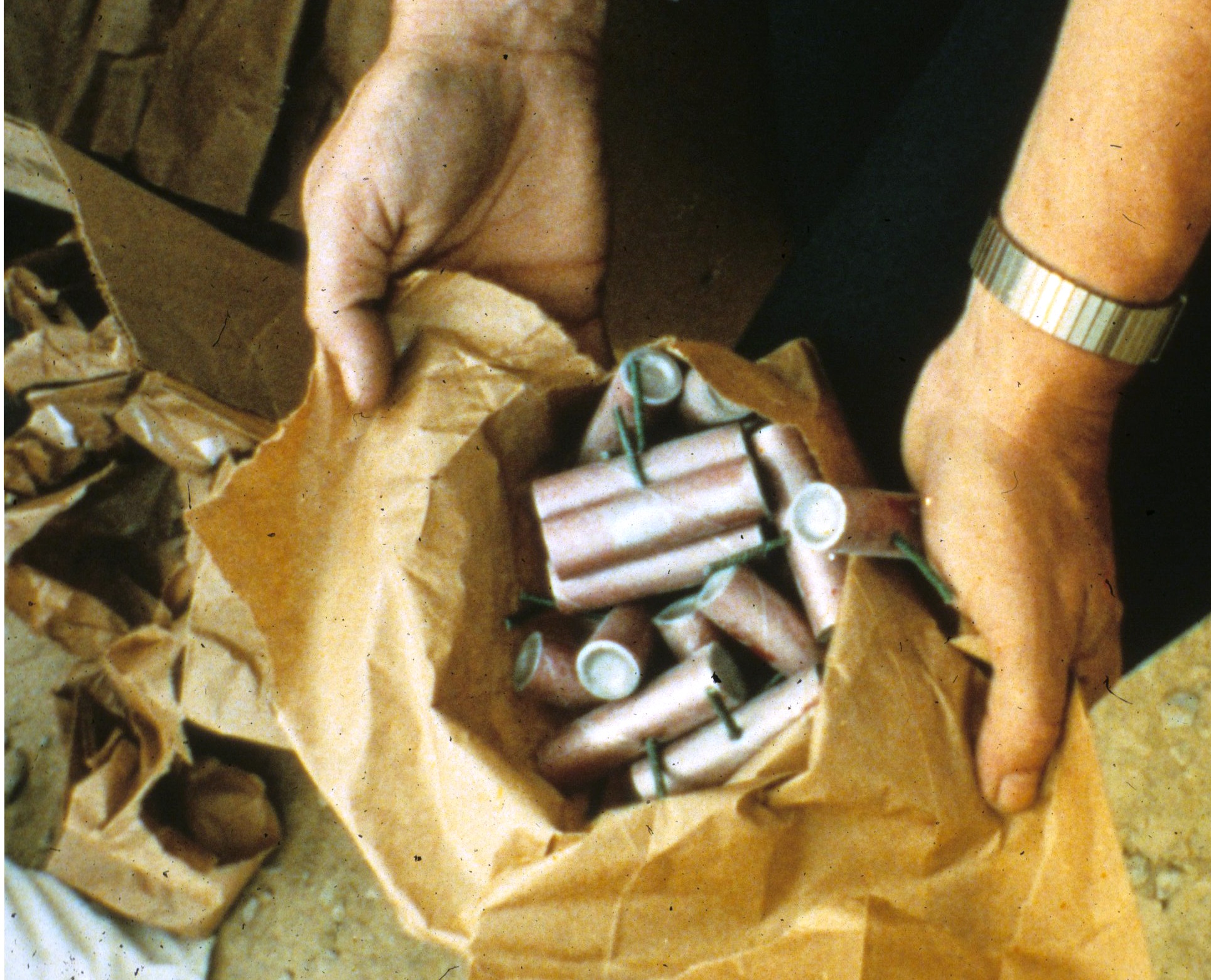
 ATF actively regulates and investigates the illegal use of explosives as part of its core mission to protect the public from violent crime. Illegal explosives are often made by manufacturers without a legal license to operate, then sold without a legal permit.
Injury or fatality can occur when devices containing improper combinations of detonating materials are ignited, whether unintentionally or deliberately. The explosive formulations in these devices typically have a susceptibility to heat, impact, electrostatic discharge, and friction. Some of these illicit explosives are inadequately constructed using extremely unstable compounds.
If the weight of their makeup exceeds the limits set by the Consumer Product Safety Commission, fireworks under this category will also fall under the Consumer Product Safety Commission’s regulations. Illegal explosive devices are typically not tested or approved for transportation under the Department of Transportation’s Hazardous Materials Regulations.
It is against federal explosives law to produce, store, distribute, receive, or transport explosive substances without a valid federal explosives license or permit (FEL/FEP).
It is crucial to understand the indications that may help in identifying an unlawful explosive device, especially if one is engaged in the handling of fireworks or other explosive materials, as these devices can present a significant threat to safety.
If you encounter suspicious explosive devices that meet any of the above criteria, please contact the ATF tip line at 1-888-ATF-BOMB (283-2662).
Common Illegal Explosives
Under comparable state and regional regulations, owning these devices without a FEL/FEP may also be considered unlawful.
M-80
Improper utilization results in harm to fingers, hands, and eyes. Risk Factor: Average Burden: 3 grams of explosives Average Measurement: Five-eighth inch diameter, 1.5 inches in length.
M-100, Silver Salute
Injuries comprise extensive harm to the face, limbs, and torso. It is only against the law to own if a person lacks a federal explosive permit. Typical quantity: 9 grams of explosive material. Typical dimensions: a diameter of 1 inch and a length of 2.5 inches.
M-250
Injuries consist of intense incapacitation and deformation of body parts. Typical Load: 13 grams of explosives. Typical Size: 1 inch in diameter, 3 inches in length.
M-1000, Quarter Stick
Improper use of explosives, with a load size of 25-30 grams, can result in severe injuries and even death. The average length is 6 inches, and the diameter is 1 inch.
Improvised Explosive Devices
Improvised explosive devices made from different materials are both forbidden and highly hazardous. Pipe bombs, typically consisting of explosive mixtures enclosed in steel pipes with a visible fuse, fall under this category. These devices are commonly employed in criminal activities and can cause significant harm to individuals and property.
Destructive Devices
Destructive devices are devices that resemble mines, missiles, rockets, grenades, poison gas bombs, or incendiary explosives. Therefore, it is illegal to possess such destructive devices under federal law. Molotov cocktails are also considered destructive devices as they consist of glass bottles filled with gasoline and a fuse that ignites upon breaking.
Combating Violent Crime
The experts at the agency often refer to investigations of incidents involving explosives and arson as local and state support. The Certified Explosives Specialists and National ATF’s Response Teams often deal with extensive property damage and serious injuries or deaths resulting from these incidents. Each year, the ATF investigates accidents involving the illegal manufacture of explosive devices, which often lead to accidents.
Got a Tip? Contact Us
If you suspect someone is involved in the creation, selling, or distribution of illegal explosive devices, please contact ATF at 1-888-ATF-BOMB (283-2662) to let us know.