Goddess Amaterasu: The Highest deity of Japanese Mythology
Introduction
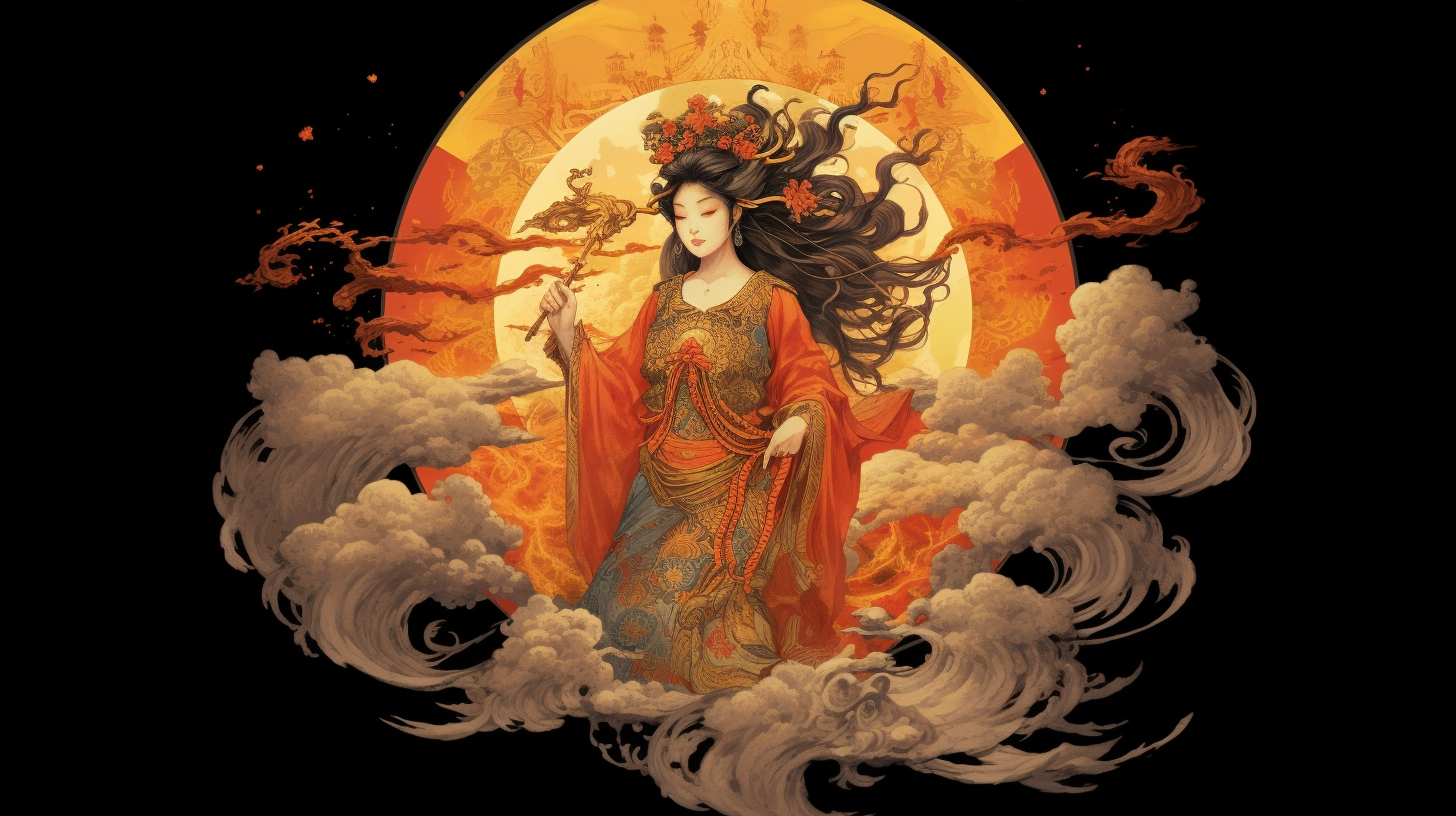
Amaterasu is the primary deity of the Shinto religion in Japanese mythology. She is revered as the goddess of the sun, universe, and creation itself, and is considered the highest manifestation of the spirit of the universe. Amaterasu holds great significance in Japanese culture and history, with her worship and mythology shaping various aspects of Japanese society.
The Birth of Amaterasu
Amaterasu’s birth is a significant event in the Shinto religion. According to mythology, she was born from the left eye of her father, Izanagi, when he purified himself after visiting the underworld. This unique birth gives Amaterasu the distinction of being the only deity born solely from Izanagi. Her birth represents a new beginning and the start of a new era in the Shinto religion.
The Importance of Amaterasu to the Imperial Family
Amaterasu holds a special place in the Japanese Imperial Family. She is highly revered as a symbol of divine right to rule, and it is believed that the survival of the imperial family depends on her blessings. Amaterasu’s association with the imperial family further legitimizes their rule and reinforces their connection to the divine.
Amaterasu’s Rule over the Higher Celestial Plane
Amaterasu is not only the goddess of the sun but also the ruler of the Higher Celestial Plane. In this realm, she is responsible for bringing light to the world through the sun that she embodies. Her position as the ruler of the Higher Celestial Plane symbolizes her connection to the universe and its creation. Amaterasu’s rule over this realm reinforces her power and importance as a deity.
The Provocation of Amaterasu and Her Retreat into a Cave
Susanoo’s Provocation of Amaterasu
According to legend, Amaterasu’s brother, Susanoo, became envious of her position as the ruler of the Higher Celestial Plane and sought to prove his own worth. In his arrogance, he first destroyed the rice fields and irrigation channels to vex his sister. He then went on to hunt the sacred horses known as the shimagahara without permission, killing one. Susanoo’s actions caused general consternation among the deities.
The World Plunged into Darkness
Amaterasu was deeply offended and angered by Susanoo’s behavior. In response, she retreated into a heavenly cave, refusing to come out. This act plunged the world into darkness and threatened all life. Amaterasu’s retreat into the cave symbolizes her withdrawal from the world and her refusal to bring light and life to the world.
Numerous Attempts to Lure Her Out of the Cave
The other gods of the heavens were deeply concerned about losing their source of light and life. They made numerous attempts to lure Amaterasu out of the cave. They tried using mirrors and drumming to entice her, but all their efforts were in vain. Amaterasu remained resolute in her seclusion, further aggravating the darkness that enveloped the world.
The Success of Luring Out Amaterasu
The gods were desperate to bring back light and life to the world. Finally, the goddess Ame-no-Uzume devised a plan to lure Amaterasu out of the cave. Ame-no-Uzume began a spirited dance in front of the cave, accompanied by laughter and ribaldry. Her energetic performance intrigued the other gods and goddesses, attracting their attention.
The Worship at the Ise Grand Shrine, Amanoiwato Shrine, and Other Places
The success of Ame-no-Uzume’s dance and music festival proved pivotal in luring Amaterasu out of the cave. This event led to the establishment of various shrines dedicated to worshipping Amaterasu. The most significant of these is the Ise Grand Shrine, located in Mie Prefecture in Japan. This shrine is believed to enshrine the body of Amaterasu and is considered the holiest site for Shintoists.