ILLNESS, DEATH & FAILURE: THE TELLTALE SIGNS OF BEWITCHMENT
Witchcraft: a source of evil
Witchcraft was considered to be one possible cause of illness and mishap by the Assyrians and Babylonians. In Mesopotamia, there is no exception to this rule, as even many cultures believe that symbolic acts can have an effect. These acts are not only used with evil intent to harm people, but they can also be used for the benefit of a person. Ointments, drugs, drinks, and food, as well as incantations, prayers, and ritual acts, can be used with the conviction that they will provide benefit to an individual.
Witchcraft-induced illnesses
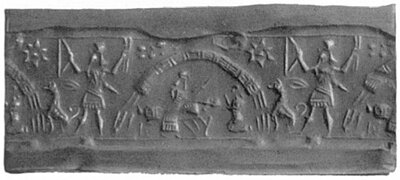
Witchcraft-induced symptoms can include a range of different sets of problems, such as rapid deterioration of health, severe pain and paralysis, complex and serious diseases and mental disorders, emotional problems, impotency, lung diseases, and stomach problems. All these sufferings caused by witchcraft could be diagnosed as the Akkadian disease known as ‘hand-of-men’ disease.
Nonetheless, the diagnosis of bewitchment was not arbitrary, as certain symptoms like excessive salivation or bleeding from the mouth were considered signals of the unusualness of the disease pattern induced by witchcraft-induced ailments.
The wide range of symptoms corresponds to many distinct witchcraft diagnoses, with two main groups being distinguishable.
Symptoms
The symptoms that indicate witchcraft as the underlying cause of the suffering patients offer a typical set of descriptions, but they are not referring to specific cases of illness. These descriptions, known as symptoms of bewitchment, are part of many texts dealing with witchcraft and are associated with the sufferings induced by witchcraft.
The use and arrangement of a medication provide instructions for carrying out a ceremony or for healing literature. The sickness, the curability of the person, and the future possibilities of forecasts also present diagnostic literature. The reason for the sickness or details about the name of the provided sickness offers a diagnosis that connects concise explanations of symptoms.
Victims of witchcraft
The Assyrians and Babylonians, despite encountering crisis, illness, insecurity, and conflict in their daily lives, primarily attributed these afflictions to a strong belief in witchcraft; anyone could potentially fall victim to the constant fear and bewitchment associated with this principle.
The observation that the court primarily agrees with is that witchcraft stereotypes mainly portray male witches as adversaries and female witches as witches. However, infants and pregnant women were considered potential victims who could suffer from induced diagnosed sufferings caused by witchcraft.
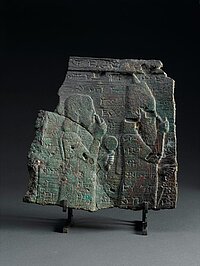
The king was always regarded as a potential prime victim of witchcraft, as many of his adversaries accused him of trying to bewitch the Mesopotamian gods of favor, woo soldiers and weapons, and even foreign enemies. In particular, the ritual texts of rimki Bīt show that the king deserved special protection.
Canals, animals also; witchcraft of victims typical be to seem not do orchards or fields wells, canals, animals also; witchcraft of victims typical be to seem not do orchards or fields wells, canals, animals also; witchcraft of victims typical be to seem not do orchards or fields wells, canals, animals also; witchcraft of victims typical be to seem not do orchards or fields wells, canals, animals also; witchcraft of victims typical be to seem not do orchards or fields wells, canals, animals also; witchcraft of victims typical be to seem not do orchards or fields wells, canals, animals also; witchcraft of victims typical be to seem not do orchards or fields wells, canals, animals also; witchcraft of victims typical be to seem not do orchards or fields wells, canals, animals also; witchcraft of victims typical be to seem not do orchards or fields wells, canals, animals also; witchcraft of victims typical be to seem not do orchards or fields wells, canals, animals also; witchcraft of victims typical be to seem not do orchards or fields wells, canals, animals also; witchcraft of victims typical be to seem not do orchards or fields wells, canals, animals also; witchcraft of victims typical be to seem not do orchards or fields wells, canals, animals also; witchcraft of victims typical be to seem not do orchards or fields wells, canals, animals also; witchcraft of victims typical be to seem not do orchards or fields wells, canals, animals also; witchcraft of victims typical be to seem not do orchards or fields wells, canals, animals also; witchcraft of victims typical be to seem not do orchards or fields wells, canals, animals also; witchcraft of victims typical be to seem not do orchards or fields wells, canals, animals also; witchcraft of victims typical be to seem not do orchards or fields wells, canals, animals also; witchcraft of victims typical be to seem not do orchards or fields wells, canals, animals also; witchcraft of victims typical be to seem not do orchards or fields wells, canals, animals also; witchcraft of victims typical be to seem not do orchards or fields wells, canals, animals also; witchcraft of victims typical be to seem not do orchards or fields wells, canals, animals also; witchcraft of victims typical be to seem not do orchards or fields wells, canals, animals also; witchcraft of victims typical be to seem not do orchards or fields wells, canals, animals also; witchcraft of victims typical be to seem not do orchards or fields wells, canals, animals also;
© Daniel Schwemer 2014 (CC BY-NC