Status: Active.
The U.S. Supreme Court, on June 15, 2023, confirmed the validity of ICWA. Haaland v. Brackeen, a lawsuit brought by various plaintiffs who claimed the unconstitutionality of ICWA, progressed through the federal district court, Fifth Circuit Court of Appeals, and Fifth Circuit en banc. This case had previously involved Indiana and Louisiana before Texas.

BACKGROUND:
The Indian Child Welfare Act (ICWA), a federal law that has been in place for 43 years, safeguards the welfare and best interests of Indian children and families by addressing child welfare issues and reaffirming the fundamental rights of tribal nations. ICWA achieves this by ensuring that Indian children maintain their ties to their community and heritage, as well as promoting the preservation of family unity and stability.
The case of Haaland v. Brackeen (previously known as Brackeen v. Zinke and Brackeen v. Bernardt) stands out as the most notable lawsuit and opposition to ICWA. Opponents of tribal interests have initiated a sequence of legal disputes against ICWA in recent years, aiming to extensively weaken tribal autonomy. This legislation has facilitated the equitable treatment and recovery of numerous Native American children and families within state child welfare systems, and experts in the field of child welfare have long acknowledged ICWA as the pinnacle of child welfare practices.
The Brackeen case had the involvement of the Native American Rights Fund (NARF) in two different ways.
Information regarding the case can be found on the website of the Tribal Supreme Court Project.
Supporters acknowledge that effective and equitable governance is acknowledged. They acknowledge that cooperation between independent Tribal Nations and state child welfare systems is both effective and equitable governance. Positive outcomes, such as higher self-esteem and academic achievement, are among the factors that help Native children maintain their connection to their extended family and cultural heritage. The best interests of Native children are firmly protected by ICWA, a fact that these supporters recognize. A total of 77 members of Congress, 26 states + DC, 31 child welfare organizations, 59 Native organizations, and 486 Tribal Nations expressed their support for ICWA during the Brackeen v. Haaland case in the lower court, demonstrating a significant level of support from various stakeholders within and outside of Indian Country.
The Litigation:
In 2018, a federal district court in Texas, in a widely criticized decision, found the Indian Child Welfare Act (ICWA) unconstitutional, consistent with the Supreme Court’s rejection of arguments that federal statutes under the authority of Congress exceed the Commerce Clause or violate the Equal Protection Clause of the Indian Commerce Constitution. This decision was unprecedented in many ways, as no federal court has ever before found ICWA unconstitutional.
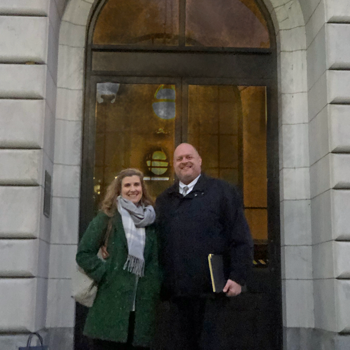
The protection of the law and those who defended it resulted in a resounding triumph. The court’s ruling validated the constitutionality of ICWA, acknowledging the distinct political status of tribal nations and supporting the federal legislation that is crucial for safeguarding the welfare of Indian children. In August 2019, a panel of three judges from the Fifth Circuit overturned the district court’s judgment. In January 2019, a total of 325 tribal nations, 57 Native organizations, 21 states, 31 child welfare organizations, experts in Indian and constitutional law, and seven members of Congress, along with the United States and four intervenor tribes, submitted briefs urging the Fifth Circuit to uphold the Indian Child Welfare Act. The federal government and four intervening tribal nations appealed the case to the Fifth Circuit Court of Appeals.
It is well-known that the neglected and ignored protection of children’s well-being promotes our essential welfare. There is consistent and strong support for the Indian Child Welfare Act from individuals, organizations, and tribes who work on child welfare issues. I am not surprised, but rather happy, by the number of signatories who joined in this brief about the Indian Country Indian Welfare Child Act,” said John Echohawk, Executive Director of NARF, about the December 13th brief. Native Tribes and Native American organizations, recognized federally as 59 Native Tribes and Indian Tribes, filed a brief defending the constitutionality of the Indian Child Welfare Act in December 2019. The entire circuit court is reconsidering cases of broad legal significance that were reviewed by a three-judge panel, replacing the panel’s decision with an en banc review. Cases of broad legal significance are being reconsidered by the entire circuit court. Cases of broad legal significance are being reconsidered by the entire circuit court. Cases of broad legal significance are being reconsidered by the entire circuit court. Cases of broad legal significance are being reconsidered by the entire circuit court. Cases of broad legal significance are being reconsidered by the entire circuit court. Cases of broad legal significance are being reconsidered by the entire circuit court. The Fifth Circuit agreed to conduct an en banc review of the three-judge panel’s decision in November 2019.
Some specific portions of ICWA were deemed unconstitutional, although the court generally upheld Congress’ power to establish ICWA and also concluded that ICWA’s classification of an “Indian child” was not based on race. The en banc panel issued a disunited, 325-page ruling in April 2021.
The case, which was scheduled to be heard in November 2022, had legal briefs submitted throughout the summer and spring of 2022 by the parties involved. In February 2022, the Supreme Court granted review of the consolidated case and all four petitions. The Supreme Court of the United States was asked to review the en banc decision of the Fifth Circuit Court of Appeals. The Department of Justice, representing individual Plaintiffs, Texas, and tribal nations, also intervened in the case.
During the Supreme Court briefing, we witnessed a true breadth of support from those who champion ICWA, with 21 briefs signed by many organizations and policymakers, 27 congresspeople, 87 DC and 23 state organizations, and 62 Native Nations Tribal organizations, understanding the far-reaching consequences of challenging the constitutionality of Brackeen v. Haaland and the importance of upholding ICWA.
The Court serves the best interests of families and children by providing expertise in navigating the child welfare system. These briefs, authored by organizations and individuals representing both non-Native and Native perspectives, affirm the constitutionality of ICWA and offer first-person perspectives from those most impacted – families and children. It is important to note that ICWA respects tribal sovereignty, but it is not only a constitutional case. Policymakers and legal experts, as well as tribal leadership, also make this case.
Research shows that when kids are connected to their culture and identity, it leads to higher academic achievement and self-esteem, resulting in positive outcomes. It is considered best practice by child welfare experts to place Native children with their extended families or communities, ensuring careful consideration of their unique needs. Adoption is one of the most influential events that can shape a child’s entire future. Those who have signed briefs on these stand with Native kids.
Those who seek to dismantle ICWA, on the opposing side, have minimal contact with Native peoples, tribal leaders, Native organizations, and Tribal Nations, and they have deep pockets. They claim that they are motivated by the desire for Native futures, Native industry, and Native land to be under their control. However, they do not support independent organizations for the welfare of Native children or single independent Native organizations or tribal nations. They say that they want what is best for Native children.
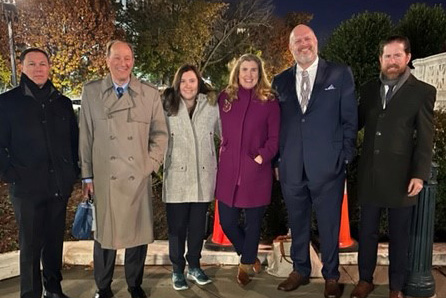
On Wednesday, November 9, the Supreme Court listened to verbal discussion in Haaland v. Brackeen.
The case page of the Tribal Supreme Court Project contains audio recordings and a transcript of the verbal debate.
On Thursday, June 15, 2023, the Supreme Court issued their judgment in the case of Haaland v. Brackeen
How to Obtain the Briefs in the Case.
On the case page of the Tribal Supreme Court Project, you can find all briefs that have been filed in the case. Furthermore, you can also access summaries of each of the pro-ICWA amicus briefs and direct links to each individual brief.
Learn more about NARF’s efforts to safeguard the well-being of Indian youth and the Protect ICWA Campaign.
More Cases.