Help prevent Airborne Illness with Biological Mosquito Control! Mosquitoes can’t turn into blood suckers if the larvae wigglers get eaten by our FISH first! Become pro-active today and do your part to help control the mosquito population naturally. Mosquitofish (Gambusia affinis) can be used in Ponds, Cattle Ponds, Livestock Water Troughs, Retention Pools, stagnant waterways, partially filled kiddie pools & more!
NATURAL, BIOLOGICAL MOSQUITO CONTROL THROUGH THE UTILIZATION OF MOSQUITO FISH. THE MOST EFFECTIVE FISH SPECIES FOR CONSUMING MOSQUITOES IN THE WORLD!
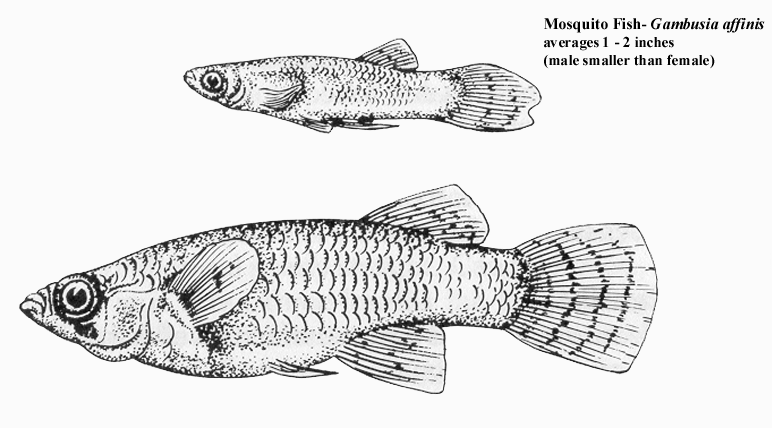
Feeds on Mosquitoes, Mosquito Larvae, and various other flying Insects and their Larvae.
Size: usually around 1/2″ but females have the potential to reach a size of about 2″ or more.
Water Requirements.
PH: flexible 5.5 – 8.5 Water Temperature: 30 – 105F +.
The female might occasionally have a seemingly swollen abdomen just prior to giving birth to frye (baby fish). As this fish does not lay eggs, but rather gives live birth, the female is consistently bigger than the male. The males are consistently smaller than the females.
Fish mosquito, such as Carp and Goldfish, are placed in a variety of semi-permanent and permanent freshwater habitats, including channels, reservoirs, wetlands, and ponds in shallow areas where larger fish cannot penetrate. These fish are capable of quickly populating a water source if favorable conditions exist and can consume upwards of 80-100 mosquito larvae per day. In addition to being compatible with most ornamental pond fish, such as Koi and Goldfish, these fish can survive in water with varying conditions, ranging from high levels of pollutants, algae, salt, and temperatures above freezing to nearly 100 degrees. Since 1915, the common guppy minnow, closely related to mosquito fish, has been widely used in the USA for mosquito control. These vivacious fish are natural and effective consumers of mosquito larvae and pupae, providing a biological solution for mosquito control without the use of harmful chemicals. They are one of the mainstays in biological mosquito control, protecting the public from mosquito-borne diseases and the transmission of mosquitoes.
Natural habitats and damage, as well as the spread of parasites and diseases, can also have an impact. Fish that breed and survive in local native species may compete for space and food, but they may also die due to disease or starvation, leading to the incorrect assumption that free fish can handle anything. So, it is not advisable to release fish into areas where they do not belong. This can pose a serious threat to important industries and fragile ecosystems, and it can be difficult to eliminate. Most plants, snails, and fish will typically not be native to your local area. If released, they will compete with and pose a difficult challenge to native species, while also causing damage to natural habitats and spreading parasites and diseases.
When getting rid of your pets, please make a responsible decision. This is an individual decision made by the buyer. We cannot manage or take responsibility for those who are unwilling to safeguard our ecosystem. As a seller of live aquatic creatures, we endorse the aforementioned statements.